
Industrial Network Planning
Custom-fit PROFINET and mixed-protocol networks engineered for OT/IIT/IIoT environments. From greenfield design to brownfield modernization, we plan networks that support production reliability long-term.
Powerful Networks as the Basis for Industrial Digitalization
Whether you're expanding a line, adding new machines, or connecting separate plants, your industrial network is the backbone of production. It has to move process data reliably across multiple network levels — OT, IIT, and IT — without introducing risk or downtime.
Every network is different. Hardware, topology, protocols, and local conditions mean that off-the-shelf designs rarely fit. InduSol America supports OEMs, system integrators, and plant operators with industrial network planning and validation — from PROFINET network design and load planning to integrating existing PROFIBUS, EtherNet/IP, and mixed OT environments.
Independent Network Planning for Industry & Engineering
Until recently, industrial plant networks operated separately from one another in homogeneous configurations. With increasing connectivity and modern monitoring solutions, most industrial networks today are heterogeneous or convergent. The interconnection of these networks presents new challenges for planners and operators.
Changing Criteria for Networks and Components
The complexity of industrial networks is already evident in initial planning stages, including the design of cable routes, industrial switches, and other network components. Gone are the days when network components from the same manufacturer as the PLC could simply be installed. The selection of appropriate infrastructure components now depends on the specific requirements of individual segments and the overall network.
Specific Network Planning Instead of Costly Oversizing
Besides planning highly available industrial networks, economic efficiency plays a crucial role in every phase. Generous oversizing may save time during planning, but subsequent material costs and additional maintenance efforts often negate initial savings. Our specialization is adapting industrial networks to meet the exact on-site requirements.
Advantages of Network Planning by User Group
Good network planning pays off differently depending on your role. Here's what it means for the three groups most involved in industrial network decisions.
Mechanical / Plant Engineering
Electrical construction
Goal
- Creating stable, cost-efficient networks
Challenges
- Designing modern, digitalized systems
- High cost pressure from competitors and customers
Benefits
- Simplified commissioning — lower costs
- Lower service costs, including during warranty
- Stronger network infrastructure, mostly price neutral
Plant Operator
Maintenance / availability
Goal
- Networks as the basis for maximum availability
Challenges
- Long-term profitability
- Maximizing plant availability
Benefits
- Higher system availability with more fault reserves
- Reduced maintenance costs through plannable, targeted measures
- Lower or no remodeling costs
Plant Operator
IT / networking
Goal
- High-performance networking from OT to IT
Challenges
- Linking separate networks without interference
- Coordination of processes and components
Benefits
- Interference-free integration of different networks
- Avoid infrastructure-related bottlenecks
- Lower or no remodeling costs
Your Road to an Optimized Network
Every network planning engagement follows a structured five-step process, from initial assessment through commissioning support and go-live.
The Kick-Off
Plant projects usually include a basic plan of the individual plant and the network it contains. We review your current state and align on goals before anything else.
The Need for Integration
The plant concept and connected networks are reviewed. Total required network performance is calculated against actual capacity, identifying any gaps between current and target state.
The Concept Analysis
Based on the current and target status, we check the existing network concept and the components in use for their suitability, identifying what needs to change and what can stay.
The Network Planning
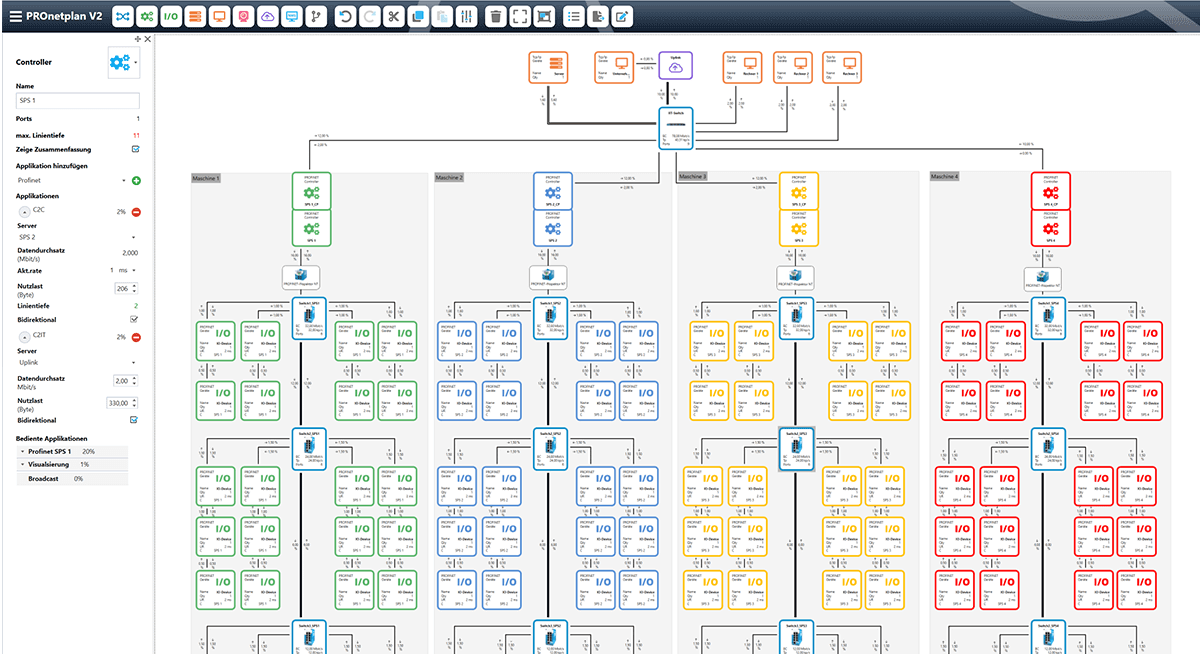
Based on all relevant requirements, network structure and components — including switches and cabling — are coordinated and documented using PROnetplan V2.
The Realization
Our experts accompany the implementation in an advisory role, or provide technical measurement support during the approval process and commissioning to confirm the network performs as designed.
Core Components of Our Network Planning Approach
Our network planning services cover the full project lifecycle, from initial concept through commissioning and long-term monitoring handover.
New Systems (Greenfield / Major Expansions)
- Concept and topology design for PROFINET and mixed-protocol networks using PROnetplan V2
- Selection and dimensioning of switches, cabling, and infrastructure components
- Network load and multicast planning for real-time traffic and future IIoT use cases
- Documentation for hand-off to OEM and system integrator teams
Existing Systems (Brownfield Plants)
- As-is network capture — topology, devices, load, and weak points
- Identification of bottlenecks, EMC issues, and single points of failure
- Modernization roadmap with low-risk steps from working to stable and expandable
Commissioning Support
- Pre-commissioning checks and acceptance measurements
- On-site or remote support during start-up and ramp-up
- Documentation for audit records and compliance
Testing & Optimization
- On-site measurements of PROFINET and Industrial Ethernet load and quality
- Verification of cycle times, jitter, and bandwidth reserves
- Recommendations for parameter changes, segmentation, and hardware upgrades
Measuring & Validation Tools
- Use of InduSol measurement tools — PROFINET-INspektor® NT, PB-Q ONE, EMCheck® — during the project
- Optional monitoring handover using PROmanage® NT so your team can track performance after go-live
PROnetplan V2 | PROFINET Network Planning Software
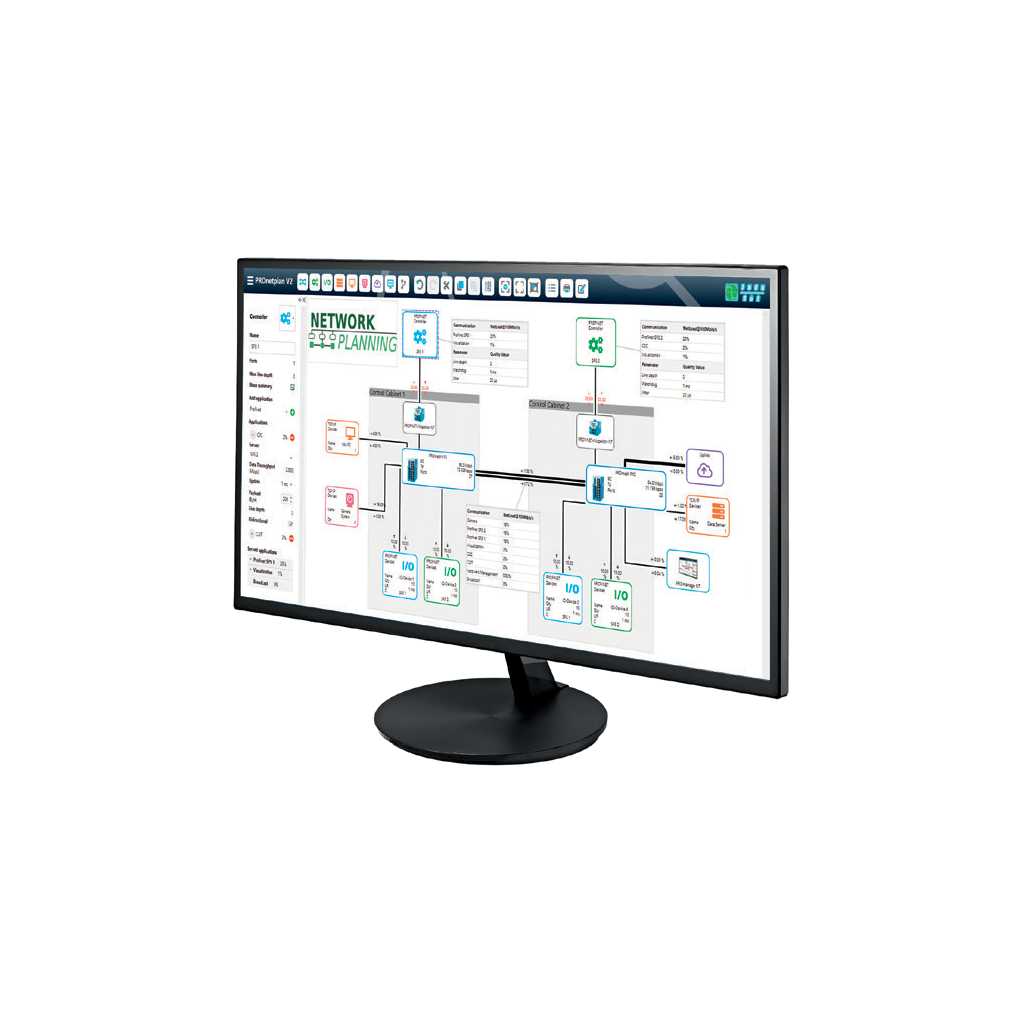
Our network planning process uses PROnetplan V2 to design, validate, and document industrial network topologies before a single cable is run.
PROnetplan V2 PROFINET Network Planning Software
- Convenient network planning via drag-and-drop topology editor
- Intuitive network load pre-planning and capacity validation
- Planning of copper, fibre-optic, and WLAN-based connections
- Creation of communication relationships between components
Need Help Planning Your Industrial Network?
Talk with our engineering team about PROFINET, PROFIBUS, OT/IT integration, segmentation, and network load planning.